
How to Choose the Right Solid State Relay for Your Industrial Application: A Comprehensive Guide
How to Choose the Right Solid State Relay for Your Industrial Application: A Comprehensive Guide
Selecting the correct solid state relay (SSR) is a critical decision for engineers and system integrators. With the global push towards Industry 4.0 and smart manufacturing, the demand for reliable, fast-switching, and long-lasting electronic switching components has skyrocketed. Unlike traditional electromechanical relays, a solid state relay uses semiconductor devices to perform switching, offering benefits like silent operation, high-speed switching, and exceptional longevity. However, the market is flooded with options—AC solid state relay, DC to AC solid state relay, 3 phase solid state relay, and more. How do you navigate this landscape? This guide, drawing on over two decades of expertise from a leading solid state relay manufacturer, will walk you through the key considerations.
Industry Context: The Drive for Efficiency and Reliability
Recent trends in industrial automation emphasize predictive maintenance and energy efficiency. A poorly chosen SSR can become a single point of failure, leading to costly downtime. Whether you're upgrading a heating system, designing a new packaging machine, or integrating control for an HVAC system, the right industrial solid state relay ensures system integrity and performance.
Step 1: Understand Your Load Type and Current
This is the most fundamental step. Mismatching the relay to the load is a common cause of premature failure.
- AC Loads: For controlling standard AC motors, heaters, or solenoids, you need an AC solid state relay. Consider if you need a standard model or a zero crossing solid state relay. Zero-crossing types switch when the AC voltage is at zero, minimizing electrical noise and inrush current, making them ideal for resistive loads like heating elements.
- DC Loads: For battery-powered systems, DC motors, or LEDs, a solid state relay dc to dc is required. These are designed to handle the challenges of DC arc suppression.
- Mixed Loads: Applications requiring a low-voltage DC signal to control a high-voltage AC load need a DC to AC solid state relay.
Current Rating: Always choose an SSR with a current rating significantly higher than your steady-state load. For a 25A load, a 40A solid state relay provides a necessary safety margin for inrush currents, which can be 5-10 times the steady state. Popular ratings include 25A solid state relay and 40A solid state relay models.
Step 2: Determine the Voltage Requirements
Voltage ratings are non-negotiable for safety and performance. The SSR must withstand the peak voltage of your system.
- Standard AC Voltages: For common single-phase applications, a 220VAC solid state relay SSR or 240V solid state relay is typical.
- Higher Voltage Applications: Industrial three-phase systems or heavy machinery may require a 600V solid state relay. Ensure the relay's voltage rating exceeds your line voltage.
Step 3: Select the Form Factor and Mounting
How and where will the relay be installed?
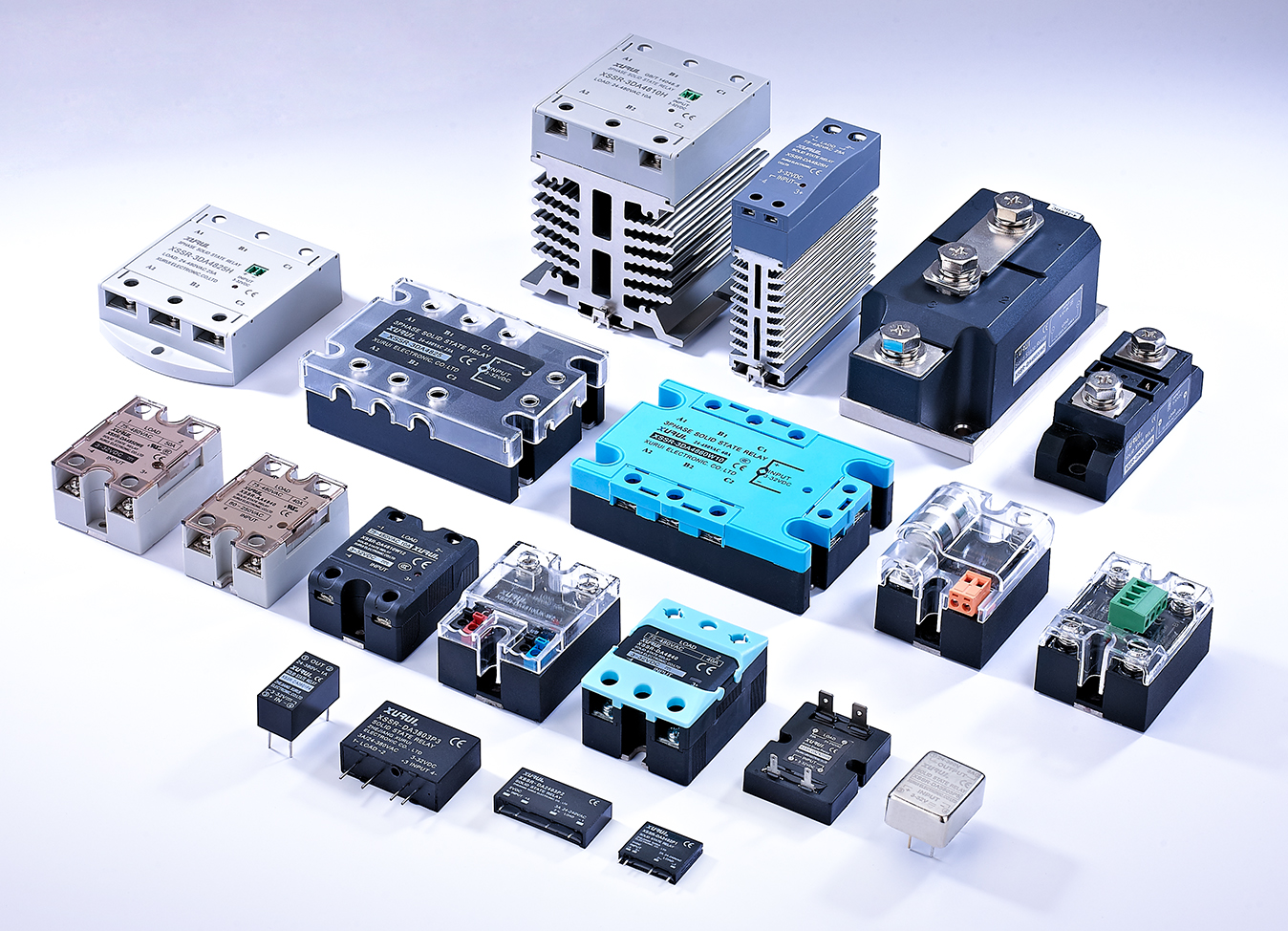
- DIN Rail Mount: The industry standard for control panels. A din rail mount solid state relay like the XURUI XSSR series allows for quick installation and easy maintenance in crowded cabinets.
- PCB Mount: For embedded systems or compact devices, PCB-mounted SSRs are soldered directly onto the circuit board.
- Module Type: These often include heat sinks and are used for higher power applications.
Step 4: Consider Control Features and Special Functions
Advanced applications demand advanced features.
- Adjustable Control: For precise temperature or speed regulation, an Adjustable solid state relay that accepts a variable analog input (like 0-10V or 4-20mA) is essential.
- Multi-Channel Control: A dual solid state relay packs two independent switches in one package, saving space and simplifying wiring for controlling two circuits.
- Three-Phase Power: For motors or industrial heaters, a 3 phase solid state relay controls all three phases simultaneously, ensuring balanced operation.
Step 5: Prioritize Safety and Compliance
Never compromise on safety certifications, especially for export or use in regulated industries.
This is where partnering with a reputable solid state relay supplier like XURUI (Zhejiang Xurui Electronics Co., Ltd.) makes a difference. As a national high-tech enterprise, Xurui's products carry globally recognized marks of safety and quality. When evaluating an SSR, look for:
- UL Solid State Relay certification (e.g., File E334724), crucial for the North American market.
- CE marking for the European Economic Area.
- TÜV, KC, and CCC certifications for other key regions.
- RoHS compliance, ensuring the relay is free of hazardous substances.
Xurui's commitment is backed by ISO9001, ISO14001, and ISO45001 management systems and over 50 patents, making them a best solid state relay manufacturer for quality-conscious buyers.
Why XURUI Stands Out as Your SSR Partner
Founded in 2002, XURUI has over 20 years of deep expertise in industrial control. Their core product line is SSR SOLID STATE RELAY solutions, ranging from low-power to 1000A models. Their comprehensive portfolio ensures you can find the exact relay for your need, be it a simple 25A solid state relay or a complex 3 phase solid state relay system.
With a philosophy of "Quality first, integrity at heart," they support a global network with distributors in the USA, South Korea, Italy, and more. For technical specifications, certifications like their UL Solid State Relay documents, or to discuss your project, contact their team:
Website: www.xuruiswitch.com
Email: Leon@chinaxurui.com
Phone/WhatsApp: +86 13968773211
Conclusion: Making an Informed Decision
Choosing the right solid state relay is a systematic process: Analyze your load, verify voltage ratings, select the mounting style, identify needed features, and insist on certified quality. In today's competitive landscape, selecting a component from a proven solid state relay manufacturer like XURUI is an investment in your system's reliability, safety, and total cost of ownership. By following this guide, you can confidently specify the optimal industrial solid state relay that will deliver silent, reliable, and maintenance-free performance for years to come.
Have Questions or Need More Details?
Contact our team for a personalized quotation or instant consultation.
Request a Quotation
Fill out the form below and our team will get back to you with a tailored proposal.
WhatsApp Direct Chat
Prefer to chat in real-time? Message us on WhatsApp for instant assistance & quick answers.
- Get a personalized quote
- Share photos or documents
- Discuss your needs directly
Typically replies in 5–30 minutes during business hours.