
How to Specify a Solid State Relay for Your Project: Load, Mounting, Environment, and Control
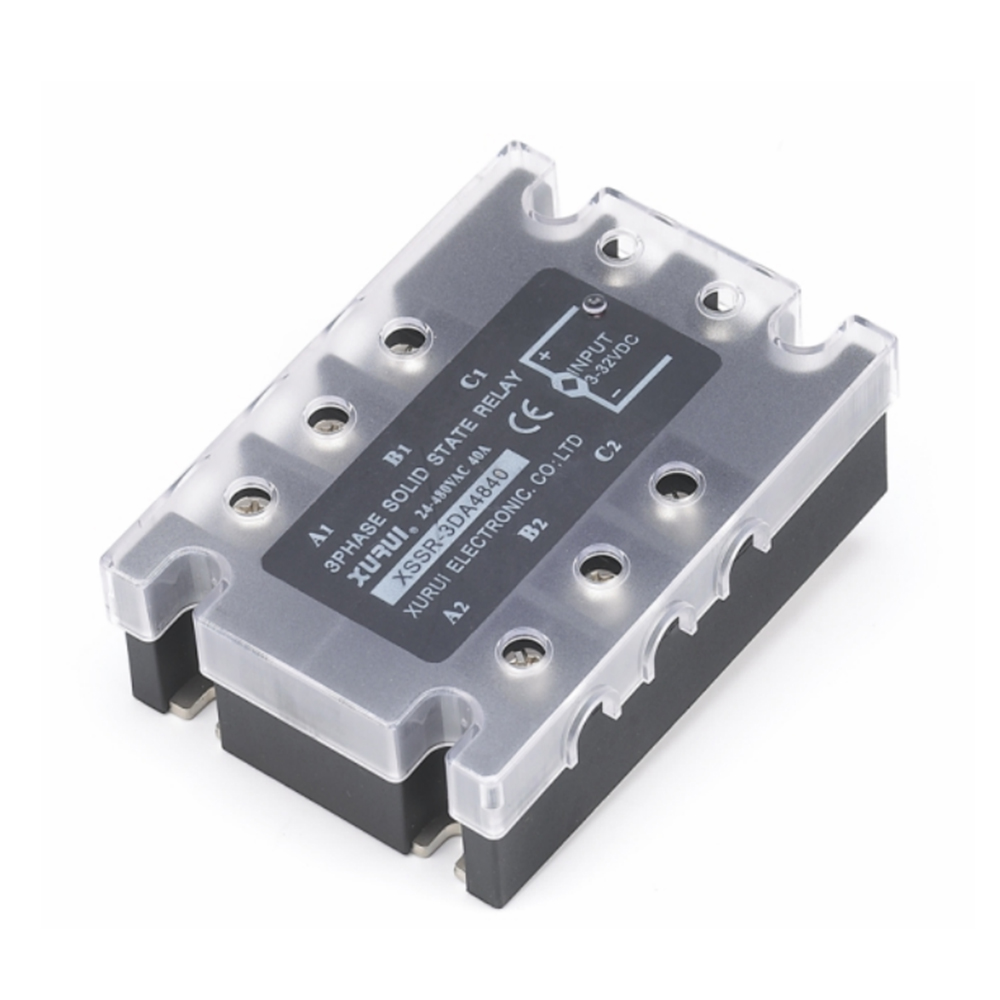
Figure 1: XURUI XSSR-3DA4840W3 solid state relay for AC load switching.
Selecting a solid state relay (SSR) in an industrial project is not about picking any relay rated for 240 VAC or 480 VAC. It is about matching the relay to the operating conditions: the load type, the control signal, the mounting method, the ambient environment, and the safety standards that apply to the equipment. This article gives engineers and buyers in the Research and Evaluation stage a practical framework for translating real project requirements into a solid state relay specification.
The global solid-state relay market was estimated at USD 1.74 billion in 2025 and is projected to reach USD 2.36 billion by 2030, according to MarketsandMarkets. Asia-Pacific accounted for about 42% of the market in 2025, driven by EV charger deployment and photovoltaic inverter manufacturing in China and Japan, according to Mordor Intelligence. In this context, specifiers need a clear, repeatable method for choosing an SSR family that will survive the full project lifecycle.
The Problem: Why Generic SSR Selection Fails in Real Projects
A solid state relay is an electronic switching device with no mechanical contacts, used to switch AC or DC loads under the command of a lower-power control signal. Because the SSR has no moving parts, it offers silent operation, faster switching, and longer electrical life than electromechanical relays. However, those benefits disappear when the SSR is specified incorrectly.
Project engineers often make the same mistakes when selecting a solid state relay:
- Only checking rated voltage and current. A 40 A SSR does not automatically suit every 40 A load; the load type affects the safe current margin.
- Ignoring the control signal. The PLC or temperature controller may provide 3–32 VDC, 80–250 VAC, or a 4–20 mA analog signal, and not all SSRs accept all three.
- Overlooking thermal management. High-current SSR operation requires good heat dissipation; a relay without an appropriate aluminum base plate may fail in continuous operation.
- Choosing the wrong mounting format. Panel-mount, DIN-rail mount, and high-current modular enclosures each suit different project architectures.
- Skipping compliance checks. Industrial SSRs may need to meet UL 508 or IEC/EN 60947-4-3 depending on the final equipment and destination market.
According to Mordor Intelligence, panel-mount SSR designs held the largest mounting configuration share at 38.67% in 2025, while DIN-rail variants are the fastest-growing segment with a forecasted 7.11% CAGR. That means mounting selection is not a trivial detail; it is a major procurement trend that affects how control panels are built and maintained.
Industry Background: What Specifiers Should Know About the SSR Market
The SSR market has moved beyond simple component replacement. The growing installed base of heating systems, motor controls, PLC-driven automation, and solar power equipment has made SSR selection a project-level engineering decision.
Three industry signals matter to specifiers:
- Market growth: Global SSR demand is expanding from USD 1.74 billion in 2025 to an estimated USD 2.36 billion by 2030.
- Standards: Industrial solid state relays are required to comply with IEC/EN 60947-4-3 (contactors and motor-starters) and UL 508 (industrial control equipment) in many regions.
- Current-rating concentration: The 0–20 Ampere current rating bracket accounted for 44.13% of the SSR market in 2025, which shows that compact, low-to-medium-current SSRs are the backbone of most projects.
For procurement, the market also includes established global brands such as Sensata (Crydom), OMRON, Carlo Gavazzi, Schneider Electric, Panasonic, and TE Connectivity. At the same time, Chinese manufacturers such as Zhejiang Xurui Electronic Co., Ltd. (XURUI) offer equivalent product architecture with a focus on cost control, customization, and faster lead times.
XURUI is a manufacturer of industrial control switches based in Yueqing, Wenzhou, Zhejiang, China. Founded in 2002, the company produces solid state relays, micro switches, limit switches, foot switches, toggle switches, reed switches, proximity switches, and photoelectric switches. Its factory covers more than 5,000 square meters with about 150 employees, and XURUI exports roughly 40% of its output to markets including the United States, Germany, Japan, South Korea, Turkey, Belgium, and Egypt.
For project buyers, the most relevant XURUI credentials are its ISO9001 quality management system certification and the availability of mainstream products with CCC, CE, TÜV SÜD, UL, KC, and RoHS certifications. XURUI also reports holding more than 60 national independent patents, supporting its ability to make customized relay products rather than only assembling standard parts.
Detailed Solution: Translating Project Requirements into an SSR Specification
The most reliable way to choose a solid state relay for an industrial project is to define six variables before opening any datasheet: load voltage, load current, load type, control signal, mounting style, and environmental conditions.
1. Load Voltage and Current
Solid state relays in the XURUI range cover load voltages of 24–240 VAC, 42–480 VAC, 24–480 VAC, and 75–480 VAC, depending on the series. Load current ranges start at 2–5 A and extend up to 1000 A in the high-current series. A project engineer should first confirm the nominal line voltage and the maximum inrush current of the controlled device.
For a 240 VAC heater, a relay such as the XSSR-W7 (24–240 VAC, 5–25 A) may be sufficient. For a 480 VAC motor starter or industrial heating bank, the XSSR-W5 (75–480 VAC, 10–125 A) or XSSR-W6 (75–480 VAC, 10–100 A) provides more headroom. The XSSR-3 W3 and XSSR-3 W4 series handle 24–480 VAC loads at 10–75 A and 75–200 A respectively.
2. Load Type and Safety Factor
The difference between resistive loads and inductive loads changes the usable current rating of the relay. For resistive loads such as electric heaters and lighting, XURUI recommends applying a load current safety factor of 50–60%. For inductive loads such as motors and solenoids, the safe factor is 30–40%.
Example: for a resistive heating load of 20 A, a 40 A-class SSR is appropriate because the relay should run at about 50–60% of its rated current. For a motor drawing 20 A, the same safety factor suggests selecting an SSR rated at approximately 50 A or higher. This is a practical decision rule that prevents overheating and premature failure.
3. Control Signal
Control signals in industrial panels come in three common forms:
- DC voltage control (3–32 VDC): used with PLC digital outputs and most temperature controllers.
- AC voltage control (80–250 VAC): used when the SSR must be switched by an AC line signal.
- Analog control (4–20 mA): used for closed-loop control of heating or process systems.
Many XURUI models support both 3–32 VDC and 80–250 VAC control inputs, including the XSSR-H, XSSR-3 W3, and XSSR-3 W4 series. These are true DC-to-AC solid state relays when driven by a DC control voltage and switching an AC load. For analog closed-loop control, the XSSVR-CA series accepts a 4–20 mA input and switches a 0–240 VAC load, with current ratings from 10 A to 120 A.
Zero-crossing behavior is another control-related feature. The XSSR-M1~M6 high-current series uses zero-crossing trigger method, which reduces voltage transients when switching resistive loads. This matters in heating control and other applications where abrupt switching can create electrical noise.
4. Mounting Style
Mounting format affects panel layout, heat dissipation, and maintenance access. The two dominant configurations in the market are panel-mount and DIN-rail mount.
- Panel-mount SSRs such as the XSSR-W5, XSSR-W6, XSSR-W7, XSSR-W12, XSSR-H, XSSR-W2-JK, and XSSR-F W2 are screwed to a flat surface, usually with a heat sink or aluminum base plate. Panel-mount designs held the largest market share at 38.67% in 2025.
- DIN-rail mount SSRs such as the XSSR-3H integrate the relay into a standardized module that snaps onto a DIN rail. This is the fastest-growing segment, with a forecasted 7.11% CAGR, because it simplifies panel assembly and replacement.
- High-current modular SSRs in the XSSR-M1~M6 series use a screw-mounted modular enclosure. The M1 model covers 60–200 A, while the M6 model covers 700–1000 A, with load voltage of 75–480 VAC.
5. Environment and Heat Dissipation
Operating temperature is a common limiting factor. XURUI solid state relays generally specify an operating temperature of -20°C to +70°C. In hot enclosures, derating or active cooling may be necessary.
Relay construction also matters. Many XURUI SSRs use PA66 nylon housings. For higher continuous currents, an aluminum-alloy base plate or heat sink is used to move heat away from the semiconductor. The XSSR-H series uses a plastic housing with an aluminum-alloy heat sink, while the XSSR-W2-JK uses an aluminum-alloy base plate.
Projects exposed to humidity, dust, and vibration should reference the application note for the XSSR-W5 and XSSR-W6: these relays are used in industrial automation, heating control, solar power systems, and equipment upgrade projects where the working conditions include high humidity, dust, and wide temperature range. The requirement is stable performance under continuous load, resistance to vibration and moisture, and long service life.
6. Compliance and Certification
The applicable standards for industrial SSRs include IEC/EN 60947-4-3 and UL 508. XURUI’s SSR products share the company-level compliance framework that includes CCC, CE, TÜV SÜD, UL, KC, and RoHS certifications. When a project targets North America or Europe, the buyer should confirm the specific certification of the exact model and factory, not rely only on a general company statement.
Step-by-Step: A Five-Step SSR Specification Workflow
Engineers can use the following workflow to move from project conditions to a shortlist of solid state relay candidates.
- Step 1 – Define the load. Record the nominal voltage, maximum steady current, inrush current, and load type (resistive or inductive). Confirm whether the load is AC or DC.
- Step 2 – Define the control source. Identify whether the controller output is 3–32 VDC, 80–250 VAC, or 4–20 mA. If the output is analog, narrow the search to analog-input SSR families such as the XSSVR-CA.
- Step 3 – Select the mounting format. Choose panel-mount, DIN-rail mount, or high-current modular format based on the panel architecture and maintenance plan.
- Step 4 – Apply the thermal and safety factors. Use a 50–60% safety factor for resistive loads and 30–40% for inductive loads. Compare the result to the relay’s continuous current rating and ambient temperature range.
- Step 5 – Verify compliance and supply chain. Check the required certifications, OEM/ODM requirements, lead time, and minimum order quantity before finalizing the specification.
Use Cases: How Project Teams Have Applied SSR Selection
Industrial Automation and Conveyor Systems
An industrial automation solution provider in Malaysia ordered 800 XURUI XSSR-M1~M6 solid state relays for PLC control systems and conveyor systems. The project ran for two years and resulted in maintenance cost reduced by 65%, with zero major failures reported during operation. The key value was high-reliability switching, long electrical lifespan, stable outdoor operation, and low-maintenance silent performance.
This case shows why high-current projects benefit from the zero-crossing trigger method and modular enclosure design of the XSSR-M series, which covers 60 A to 1000 A at 75–480 VAC.
Heating Control Systems in Germany
A German industrial equipment manufacturer used 1,200 XURUI solid state relays for heating control systems over a three-year period. The result was maintenance cost reduced by 60% and fewer mechanical failures reported. The SSR’s long electrical life and low maintenance nature make it a natural replacement for contactors in resistive heating projects.
Solar Power, HVAC, and Equipment Upgrade Projects
XURUI’s published application scenarios for the XSSR-W5 and XSSR-W6 cover industrial automation, heating control systems, solar power systems, and equipment upgrade projects. In those projects, the relays switch heaters, motors, PLC-controlled loads, temperature controllers, and power supply systems. The special requirements are high heat-dissipation efficiency through an aluminum base plate, stable performance under continuous load, vibration and moisture resistance, and long service life.
Comparison: Selecting from XURUI SSR Series by Project Requirement
The following table summarizes the main XURUI solid state relay families and the project conditions they suit. All data is based on published product specifications.
| Project Requirement | Recommended XURUI Series | Load Current Range | Load Voltage | Mounting | Key Feature |
|---|---|---|---|---|---|
| Heating and temperature control | XSSR-W7, XSSR-W5, XSSR-W6 | 5–125 A | 24–480 VAC | Panel mount | Resistive-load optimized, PA66 housing |
| General AC motor and power control | XSSR-H, XSSR-W2-JK | 5–120 A | 24–480 VAC | Panel mount | Aluminum heat sink / base plate |
| DIN-rail automation panels | XSSR-3H | 10–60 A | 24–480 VAC | DIN rail | Integrated module housing |
| High-current PLC and conveyor systems | XSSR-M1~M6 | 60–1000 A | 75–480 VAC | Screw mount, modular | Zero-crossing trigger |
| Analog closed-loop control | XSSVR-CA | 10–120 A | 0–240 VAC | Horizontal screw | 4–20 mA input |
| Compact PCB-level projects | XSSR-P1/P2/P3 | 2 A | 24–240 VAC | PCB / panel | Low leakage, compact |
This table is a starting point, not a substitute for full parameter review. The final choice should always be verified against the specific relay model’s datasheet, especially for inrush current, leakage current, and thermal derating.
FAQ
What standards should an industrial solid state relay comply with?
Industrial solid state relays are commonly required to comply with IEC/EN 60947-4-3, which covers contactors and motor-starters, and UL 508, which covers industrial control equipment. Buyers should also confirm the specific certifications of the manufacturer and the exact model. For example, XURUI maintains ISO9001 quality management certification and offers products with CCC, CE, TÜV SÜD, UL, KC, and RoHS certification, but each project should verify model-level compliance for its destination market.
Can XURUI manufacture custom solid state relays for OEM/ODM projects?
Yes. XURUI supports OEM and ODM production with customization options for handle or logo, dimensions, and operating characteristics. The factory’s monthly capacity ranges from 5,000 to 250,000 units, with 100% pre-shipment testing and export experience across the EU, Asia-Pacific, North America, and the Middle East. Remote after-sales support is also available to international customers.
How much current margin should I apply when selecting a solid state relay?
For resistive loads, apply a safety factor of 50–60% of the SSR’s rated current. For inductive loads, apply a safety factor of 30–40%. A 40 A relay, for example, is appropriate for roughly 20–24 A of resistive load current or 12–16 A of inductive load current. This prevents overheating and extends the relay’s operating life.
Can I request samples before placing a production order?
Yes. Buyers can request SSR samples to verify fit, form, and function before committing to a larger order. XURUI’s standard MOQ is 100 units for production, and sample requests can be directed to the sales team at Leon@chinaxurui.com or via WhatsApp at +86 13968773211.
What is the typical lead time for a solid state relay order?
XURUI’s typical lead time is 15–30 days, depending on the quantity and customization requirements. With a monthly capacity of 5,000–250,000 units, standard production can be scheduled efficiently, while OEM/ODM modifications may require additional engineering coordination. Buyers with fixed project deadlines should communicate their required sample and production dates early to reserve capacity.
Conclusion
Project-level solid state relay selection is a repeatable engineering process. By defining the load, control signal, mounting format, thermal environment, and compliance requirements, industrial buyers can move from a vague specification to a shortlist of SSR families that will work safely for years.
XURUI offers a broad SSR portfolio that covers 2 A PCB-level relays up to 1000 A high-current modules, DC-to-AC control, zero-crossing triggering, and DIN-rail options. The company’s certifications, OEM/ODM flexibility, and export experience make it a practical reference point for engineers and procurement teams evaluating Chinese solid state relay manufacturers.
If you are preparing an SSR specification for an automation, HVAC, heating, or renewable energy project, the next step is to verify the exact model against your load profile and request a datasheet or sample.
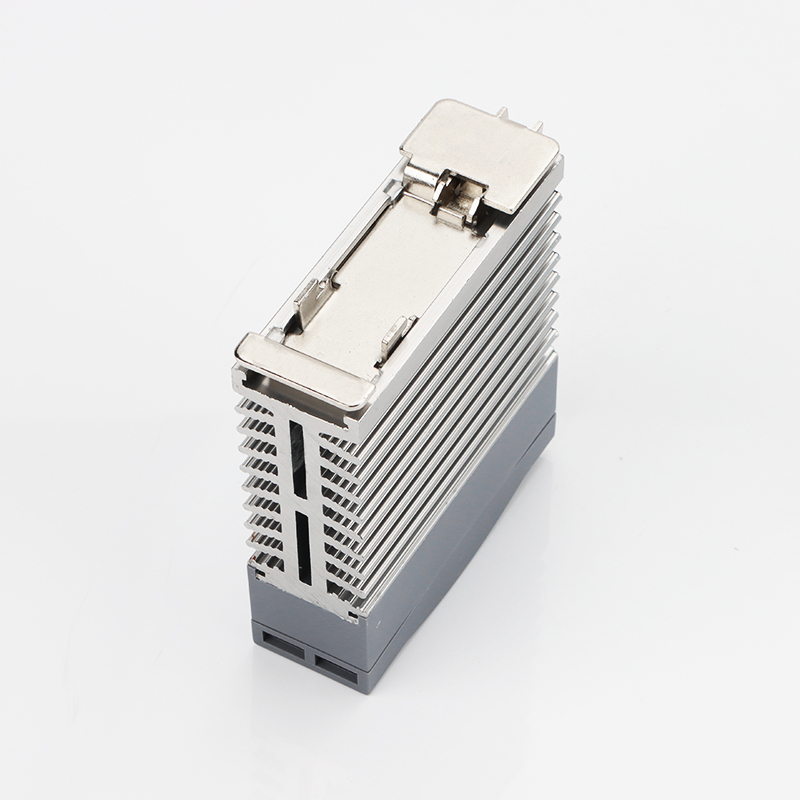
Figure 5: XSSR-H solid state relay series with aluminum-alloy heat sink.
Ready to confirm the right solid state relay?
Contact XURUI:
Leon
Email: Leon@chinaxurui.com
Tel: +86-577-62911448
WhatsApp: +86 13968773211
Have Questions or Need More Details?
Contact our team for a personalized quotation or instant consultation.
Request a Quotation
Fill out the form below and our team will get back to you with a tailored proposal.
WhatsApp Direct Chat
Prefer to chat in real-time? Message us on WhatsApp for instant assistance & quick answers.
- Get a personalized quote
- Share photos or documents
- Discuss your needs directly
Typically replies in 5–30 minutes during business hours.