
What Is a Solid State Relay? Silent Switching Basics for Consumer Electronics
A solid state relay (SSR) is an electronically controlled switching component that uses a semiconductor output stage instead of moving contacts. In consumer electronics, it sits between a low-power control circuit and a separate load circuit, allowing a control signal to switch power without the mechanical click of a contact armature. That is the practical meaning of “silent switching”: the sound is absent because no contact is physically moving, not because the whole product is acoustically silent.
This article is written for early category discovery. It does not try to rank SSR models or decide which one is “best” for a consumer product. Instead, it explains the basic component role, where an SSR may appear inside a device, and the vocabulary a buyer or design team should recognize when reading an SSR listing for the first time.
Why the solid state relay question comes up in consumer electronics
A consumer device often contains two kinds of circuits: a control side that makes decisions, and a load side that actually consumes power. The control side may run at a low DC voltage; the load side may be a mains AC heater, a lamp, a small motor, a solenoid, or another separate circuit. An SSR is one way to bridge those two domains.
The word “relay” is familiar because electromechanical relays have been used for decades. An electromechanical relay opens or closes metal contacts. An SSR performs the same broad switching job electronically. The design intent is different: the SSR’s output is produced by a semiconductor device, and the control input is isolated from the output in the relay’s internal design.
That difference is why the term “silent switching” appears in SSR descriptions. When an electromechanical relay changes state, an armature moves and a click may be audible. An SSR does not rely on that moving contact, so the contact click is not present. This is a component-level statement. The finished consumer product may still contain fans, pumps, transformers, buzzers, or other sound sources.
The basic blocks inside an SSR
Most introductory SSR explanations describe three functional blocks: an input section, an isolation section, and an output section. The exact circuit varies by product family, and the datasheet remains the authority for a specific model.
- Input section: receives the control signal. It may be a DC logic-level voltage, an AC control voltage, or an analog control signal, depending on the model.
- Isolation section: separates the control side from the output side. This is a core reason an SSR can be used between a low-voltage control board and a higher-voltage load circuit.
- Output section: performs the actual load switching. AC-output and DC-output SSRs use different semiconductor arrangements; the listing should state the output type and load range rather than leaving the buyer to assume.
An SSR is therefore not simply “a switch” in the abstract. It is a component with a defined input range, a defined output range, a mounting style, and a set of electrical terms that must match the application. That is why reading the listing is part of the buying process, even at an early stage.
Where an SSR fits inside a consumer device
In a simplified device architecture, the path looks like this: user interface or sensor → control board → SSR input → SSR output → load. The SSR does not decide when to switch; it executes a command from the control side. The control board may be a microcontroller, a thermostat, a timer, or another control module.
That placement matters because it defines what the buyer must specify. The SSR’s input must accept the available control signal. Its output must match the load’s voltage and current. Its physical form must fit the enclosure or panel. Its thermal and isolation requirements must be handled by the surrounding design.
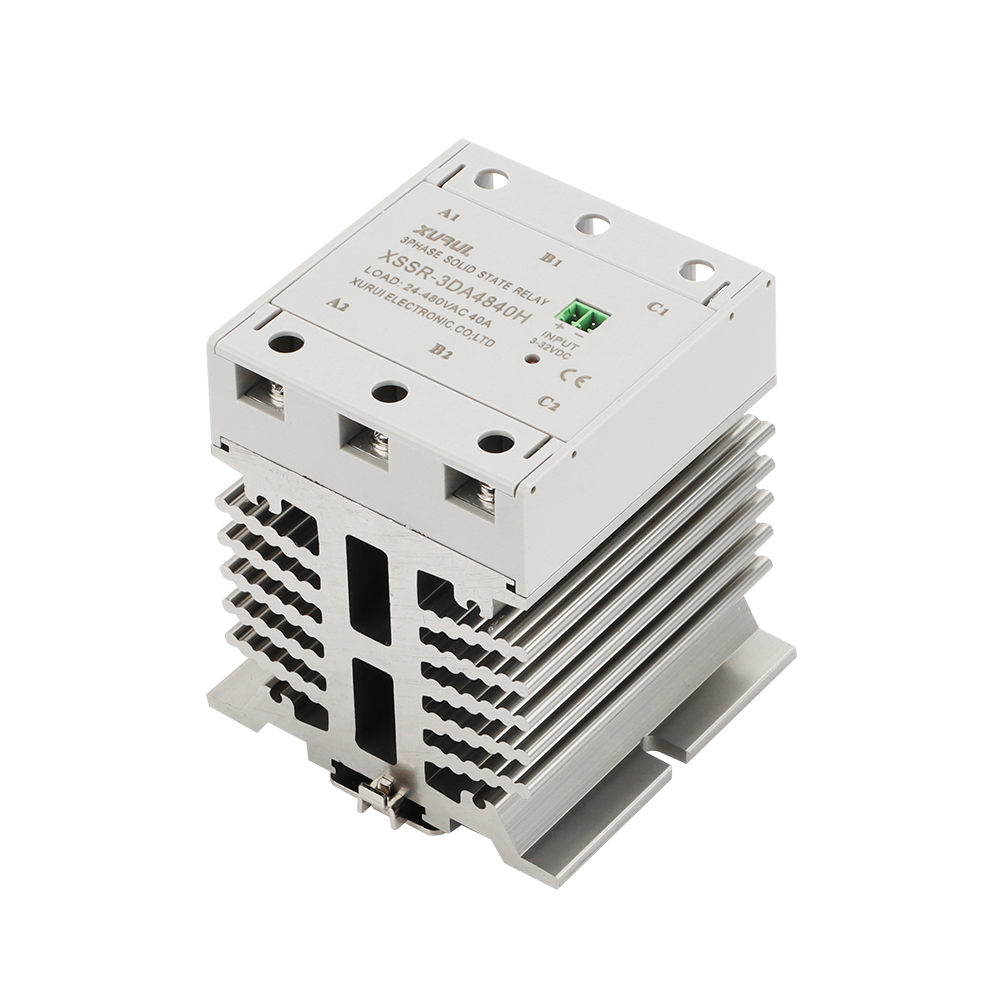
The supplied XURUI listings show several integration styles. The XSSR-3H listing describes a DIN-rail mount, integrated module housing. The XSSR-F W2 listing describes horizontal screw mounting. The XSSR-M1 to M6 family describes screw mounting in a modular enclosure. These are not claims that one style is better; they show that mounting is part of the component definition and must be checked before a design freezes.
The vocabulary a first-time SSR buyer should recognize
The fastest way to move from “what is an SSR?” to “can I use this SSR?” is to learn the listing vocabulary. The table below uses terms and examples from the supplied XURUI SSR listings. It is a vocabulary map, not a product ranking.
| Term | What it tells the reader | Example from a supplied listing |
|---|---|---|
| Control voltage | The input signal range intended to turn the SSR on or off. | XSSR-3H lists 3–32VDC (DA) or 80–250VAC (AA), depending on the control version. |
| Load voltage | The output-side voltage range the SSR is listed to switch. | XSSR-3H lists 24–480VAC; XSSVR-3P lists 0–380VAC for a three-phase load. |
| Max load current | The highest output current in the listing’s model range. | XSSR-3H lists 10A to 60A across the family; XSSVR-3P lists 10A to 200A. |
| Min load current | The lower output-current boundary stated for the model. | XSSR-3H lists 0.08A; XSSVR-3P lists 0.05A. |
| Switching time | The listed transition time for the switching action. | XSSR-3H lists ≤10 ms; XSSVR-3P lists ≤10 ms. |
| Mounting style | How the module is intended to be fixed in the equipment. | XSSR-3H: DIN-rail mount; XSSR-F W2: horizontal screw mounting. |
| Zero-crossing trigger | An AC turn-on behavior stated for some models; it should be checked per listing. | XSSR-M1 to M6 list zero-crossing as the trigger method. |
| Operating temperature | The ambient temperature range stated for operation. | XSSR-3H lists -20°C to +70°C; XSSVR-3P lists -20°C to +70°C. |
| Output leakage current | A small current value stated for the output side; it belongs with the off-state discussion. | XSSR-3H lists ≤8 mA; XSSR-F W2 lists ≤5 mA. |
| Dielectric strength | An isolation-related rating stated in the listing. | XSSR-3H lists >2500VAC; XSSVR-3P lists ≥2500VAC. |
Two reading habits help prevent confusion. First, a family range is not the same as a single model’s rating. If a listing says “10A to 60A,” the buyer still needs the exact model suffix and datasheet for the chosen current. Second, a term that appears in one family does not automatically apply to every SSR. Zero-crossing, for example, is stated for the XSSR-M1 to M6 family in the supplied listing; it should not be assumed for a model that does not state it.
What XURUI’s SSR listings show about product structure
Zhejiang Xurui Electronic Co., Ltd. is a China-based manufacturer and supplier of industrial electric switches, established in 2002. The company manufactures solid state relays as part of its industrial electric switch portfolio, alongside micro switches, limit switches, foot switches, toggle switches, reed switches, proximity switches, and photoelectric switches. Its manufacturing facility covers more than 5,000 square meters, employs approximately 150 staff, and has an annual production capacity of 20 million units.
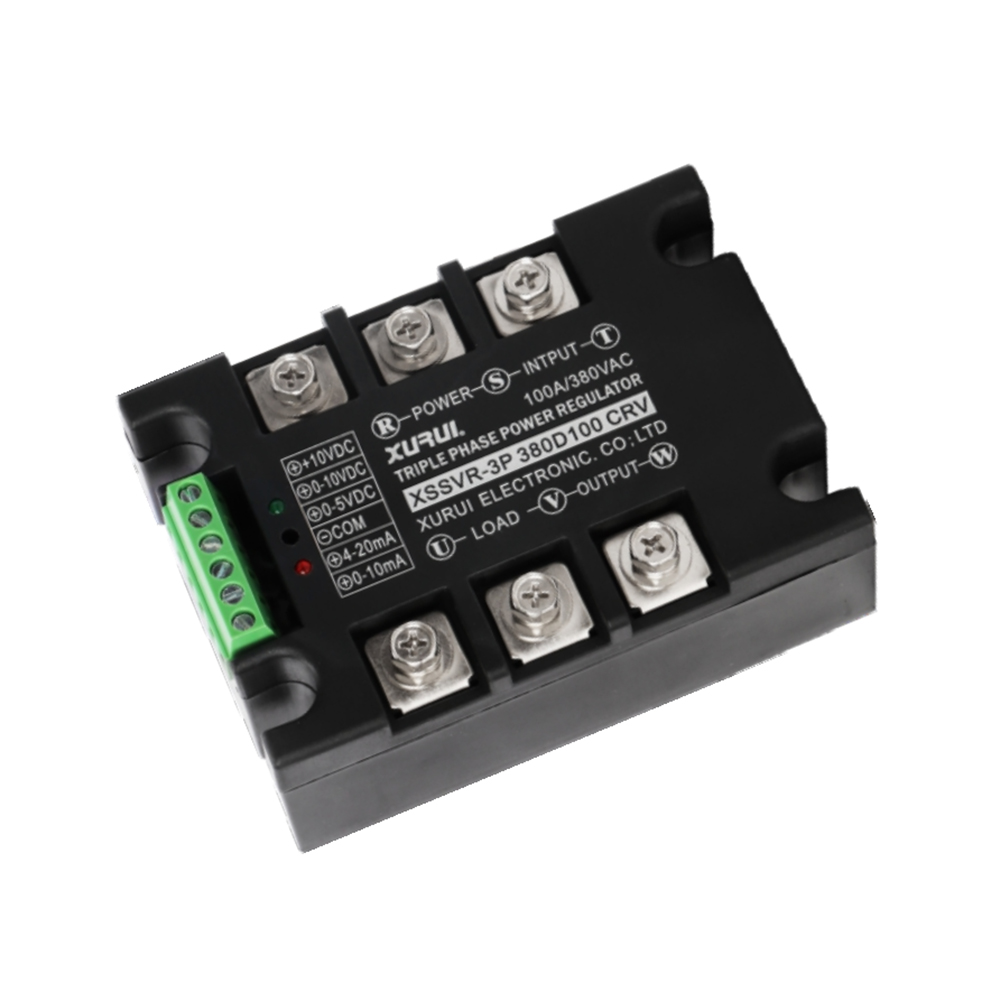
For early discovery, the value of the XURUI SSR listing is not a single headline number. It is the way the products are described. The XSSVR-3P listing presents a three-phase AC SSR with control-signal options that include potentiometer, voltage, and current inputs; it lists a 0–380VAC three-phase load voltage and a 10A–200A maximum load-current range. A buyer reading that listing learns that “three-phase” and “control-signal type” are part of the product definition, not afterthoughts.
The XSSR-3H listing shows a different structure: a DIN-rail-mounted module with 3–32VDC or 80–250VAC control options, a 24–480VAC load range, a 10A–60A family current range, and a listed switching time of ≤10 ms. The XSSR-M1 to M6 family extends the load-current range from 60A to 1000A across the family and lists zero-crossing triggering. These examples are useful because they show how an SSR listing separates control, load, mounting, and switching behavior.
They also show why a first-time buyer should not choose by model name alone. The same broad product category contains different input types, output configurations, mounting styles, and current ranges. The correct starting point is the application, not the largest number in the catalog.
How to work through a first SSR shortlist
A practical first pass can be organized into six steps. The sequence keeps the load and control conditions ahead of model names.
- Start with the load. Identify whether the load is AC or DC, its nominal voltage, and its current demand. A listing’s load voltage and load current fields only help after these facts are known.
- Identify the control source. A microcontroller output, a thermostat, a PLC, or an analog controller may present different signal types. Match the SSR’s control voltage or control current to the available signal.
- Check the switching behavior named in the listing. For AC loads, confirm whether the model states zero-crossing or another turn-on method. Do not assume a behavior that is not stated for the exact model.
- Confirm the physical form. DIN-rail, panel, screw, or horizontal screw mounting changes how the SSR fits the enclosure and how the assembly is serviced. Dimensions and terminal access belong in the review.
- Read the boundary terms. Minimum load current, output leakage current, operating temperature, and isolation-related ratings are part of the application discussion. They are not decorative specifications.
- Resolve the exact model suffix. A family listing can cover several current ratings. Ask for the datasheet for the exact suffix before treating the family range as the selected rating.
This process is intentionally conservative. It does not promise that a catalog match is a finished design. It simply prevents the most common early mistake: selecting an SSR by one headline number while ignoring the control side, the load side, or the mounting envelope.
Consumer-electronics scenarios where the question comes up
Consumer electronics is a broad category, and not every product needs an SSR. The component question usually appears when a device must switch a separate load rather than only process a low-voltage signal. The following are conditional examples, not claims about deployed products.
Smart-home control modules
A control module that switches a mains lighting circuit may use a relay-family component between its control board and the lamp circuit. If the design chooses a semiconductor output stage, an AC solid state relay is one possible component family. The listing must match the lamp circuit’s voltage and current, and the enclosure must address thermal and isolation requirements. “Silent switching” may be relevant if the module is installed near living spaces, but it should be understood as the absence of a contact click, not as a guarantee of a silent installation.
Small appliances with heating elements
A heating load is often an AC load. An AC SSR may be considered when the control board needs to switch that heater circuit through an isolated output. The supplied XSSR-3H listing, for example, states a 24–480VAC load range and a 10A–60A family current range. Whether a particular heater is suitable depends on its actual current, inrush behavior, thermal design, and the appliance’s safety architecture.
Low-voltage DC load control
SSRs also exist in DC-output forms, but the model listing must state the DC load range. The XURUI listings highlighted in this article are AC-load examples, so they should not be treated as evidence for a DC-output application. This distinction is important in consumer electronics because a low-voltage DC load and a mains AC load require different output structures and different verification steps.
Motorized or inductive loads
A small motor, fan, or solenoid can create conditions that a simple resistive-load example does not capture. Early discovery should mark motor and inductive loads for engineering review rather than assuming that a current rating alone settles the choice. The SSR listing is a starting point; the application conditions determine whether further evaluation is needed.
What an SSR is not
An SSR is not a complete consumer product, a smart plug, or a finished safety barrier. It is a component that must be integrated into a broader design. The device maker remains responsible for enclosure, creepage and clearance, thermal path, wiring, and end-product evaluation.
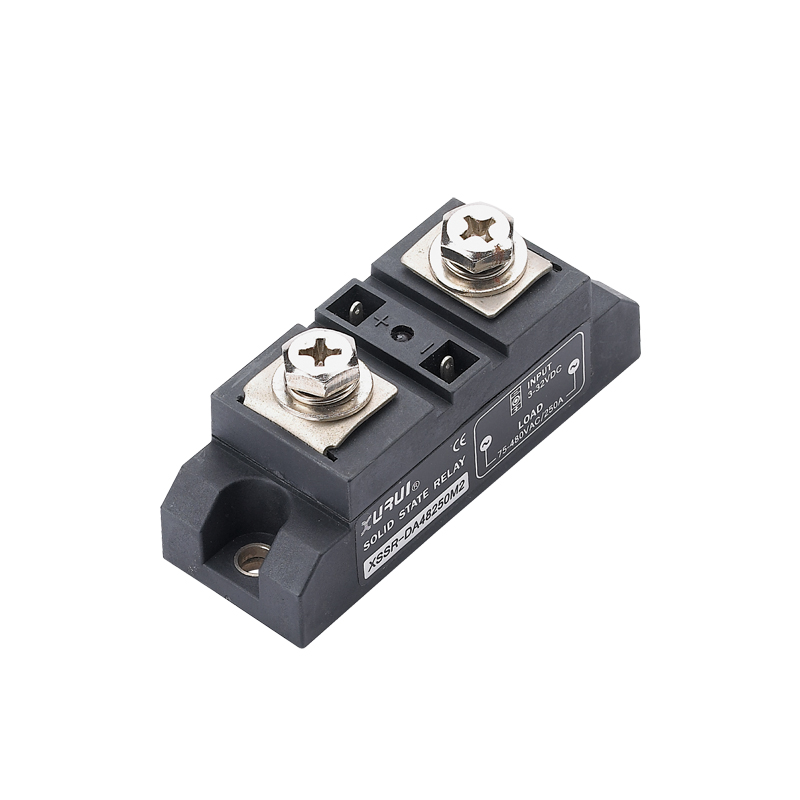
An SSR is also not automatically interchangeable with another SSR of the same current rating. Control voltage, load voltage, mounting, switching behavior, and exact model suffix all belong to the selection. A 40A solid state relay listing and a 25A solid state relay listing may look similar at a glance, but the surrounding conditions still need to be checked.
Finally, “silent switching” should not be stretched into “no electrical noise” or “no sound in the finished product.” It describes the absence of a moving contact in the switching action. Other parts of the device can still produce sound, and the installation can still have acoustic considerations.
FAQ: solid state relay basics for consumer electronics
Is a solid state relay the same as a mechanical relay?
No. Both are switching devices, but an electromechanical relay opens and closes physical contacts, while a solid state relay uses a semiconductor output stage. The SSR’s control input is intended to be isolated from its output. This difference is why an SSR is described as having no contact movement and therefore no contact click during switching.
What does “silent switching” mean in an SSR?
It means the switching action does not depend on a moving contact armature, so the audible click associated with mechanical contact movement is absent. It does not mean the entire consumer device is silent. Fans, pumps, power supplies, and other parts may still generate sound. “Silent” is a component-level description, not a whole-product acoustic guarantee.
Which basic parameters should a buyer check first?
Start with the load: AC or DC, load voltage, and load current. Then check the control side: control voltage or control current. After that, review mounting style, switching behavior such as zero-crossing where stated, minimum load current, output leakage current, operating temperature, and the exact model suffix. A family range is not a substitute for the chosen model’s datasheet.
Can one SSR switch both AC and DC loads?
Do not assume so. SSR families include AC-output and DC-output types, and the listing must state the applicable load voltage and output type. The XURUI listings highlighted in this article are AC-load examples, including the XSSR-3H, XSSVR-3P, XSSR-F W2, XSSR-M1 to M6, and XSSR-W5 families. A DC-load application requires a listing that explicitly covers the DC load range.
Where can I start comparing XURUI SSR models?
Begin with the exact application conditions and then read the relevant XURUI SSR listing fields: control voltage, load voltage, load current, mounting, and switching behavior. The company product portfolio covers solid state relays among its industrial electric switch lines, and the downloadable XURUI brochure provides a broader reference for early discovery. For a first shortlist, use the listing to identify candidate families, then request the exact model datasheet before design commitment. You can review the company site at xuruiswitch.com or download the brochure here: XURUI product brochure PDF.
Conclusion
A solid state relay is a semiconductor-based switching component with an input, an isolation function, and an output stage. In consumer electronics, its role is to let a control circuit switch a separate load without relying on moving contacts. That is the foundation behind the phrase “silent switching”: no contact armature moves, so no contact click is produced.
The useful next step is not to memorize a single model number. It is to learn the listing vocabulary: control voltage, load voltage, maximum and minimum load current, switching time, mounting style, zero-crossing where stated, operating temperature, leakage current, and isolation-related ratings. With those terms, a first-time buyer can read an SSR listing as a set of application conditions rather than as a wall of numbers.
Continue the SSR discovery path
For early-stage category review, compare the supplied XURUI SSR families by application conditions first, then confirm the exact model datasheet. The XURUI brochure is available as a starting reference for product-family orientation.
Have Questions or Need More Details?
Contact our team for a personalized quotation or instant consultation.
Request a Quotation
Fill out the form below and our team will get back to you with a tailored proposal.
WhatsApp Direct Chat
Prefer to chat in real-time? Message us on WhatsApp for instant assistance & quick answers.
- Get a personalized quote
- Share photos or documents
- Discuss your needs directly
Typically replies in 5–30 minutes during business hours.