
When Your Solid State Relay Runs Hot: A Problem-Solution Guide for Consumer Electronics
If a solid state relay (SSR) runs hotter after it is assembled into a consumer-electronics enclosure, the relay itself may not be the first thing to replace. The more useful first question is what changed between the bench and the finished product: the real load, the mounting contact, the surrounding air temperature, or all three.
An SSR is a semiconductor switch, so heat is part of normal operation rather than proof of a defect. A unit that feels warm is not automatically faulty. A unit that becomes noticeably hotter after enclosure assembly needs a structured check before a design change is made.
This guide uses a problem-solution path: define the symptom, identify likely causes, diagnose in steps, and choose a supported remedy. XURUI is a Zhejiang-based manufacturer of low-voltage control switches, founded in 2002, with an ISO9001 quality system and an SSR range that includes the XSSR-P, XSSVR-CA W2, XSSR-3H and XSSR-W2 families. More company information is available at XURUI.
The short answer: heat after enclosure assembly is a system signal
Short answer: Treat excess heat as a system symptom, not an automatic relay failure. Check three areas in order: actual load versus the selected SSR model, the mounting path that carries heat out of the relay, and the enclosed air temperature around the product. Change one variable at a time and retest with the same method.
- Load fit: the real current may be higher than the bench estimate, may include inrush, or may need a model-specific safety margin.
- Mounting: screws, surfaces, thermal interfaces and orientation affect how heat leaves the relay.
- Enclosure: a closed case can raise local temperature and reduce air movement around the SSR.
The problem: hot is not a diagnosis
Temperature needs to be judged against a measured baseline, the exact model data, and the conditions inside the finished enclosure. The supplied XURUI product summaries list an operating-temperature range of -20°C to +70°C for several SSR models. That is an operating-temperature range. It is not a surface-temperature target, and it does not replace the exact datasheet or a qualified thermal review.
Start by recording where the heat is found. A relay that is warm while the whole enclosure is also warm points to an ambient or airflow problem. A relay that is much hotter than nearby components points to local load loss, mounting resistance or a device mismatch. Discoloration, burning smell, cracked housing or erratic switching are stop signs: de-energize the product and investigate before further operation.
Why an SSR that passed bench tests can run hot inside a finished product
Bench tests often use short wires, open air, a resistive load and a temporary supply. A finished consumer product adds a closed case, dense wiring, a different load profile and a smaller thermal path. Those changes can turn an acceptable bench result into an unacceptable enclosure result without any change to the relay part number.
Load fit changes when the real product load is applied
An SSR rated for a maximum current is not a promise that the same current is thermally free in a small enclosure. Heat rises with load current and with the relay's on-state voltage drop. The XSSR-W2 and XSSVR-CA W2 summaries list an on-state or breakover voltage of no more than 2VAC, while the XSSR-P series lists no more than 1.5VAC. Higher current through that drop means more heat to remove.
Load type also matters. A resistive heater and an inductive motor can draw very different inrush currents and can present different switching duty. For the XSSVR-CA W2, the supplied data lists a load-current safety factor of 50-60% for resistive loads and 30-40% for inductive loads. That is a model-specific planning value, not a universal rule for every SSR. Apply the exact model's documented guidance.
Minimum load is a separate check. The listed minimum load currents are 0.05A for XSSVR-CA W2, 0.08A for XSSR-3H, 0.1A for XSSR-W2 and 0.03A for the XSSR-P series. If the actual load is below the stated minimum, the switching behaviour is outside the listed range and should be discussed with the supplier before thermal conclusions are drawn.
Mounting can add resistance to the heat path
The relay does not remove heat by itself. Heat has to move from the internal semiconductor path into the housing and then into the mounting surface, air or an external thermal part. A bowed panel, an uneven contact surface, loose screws, an incorrect insulating pad or a mounting orientation that differs from the instruction can raise the temperature at the relay.
Use the exact model's mounting method. The XSSVR-CA W2, XSSR-W2 and XSSR-P series are described as horizontal or screw-mounted designs. The XSSR-3H is a DIN-rail mount, integrated module with a PA66 nylon housing and aluminium content. The presence of aluminium is thermally relevant, but it is not a guarantee that every enclosure will run cool. The rail, panel and surrounding air still matter.
Enclosure conditions change the air around the relay
A finished consumer-electronics enclosure can trap heat from the SSR, the power supply, transformers, lamps, motor drives or nearby warm surfaces. Blocked vents, dust filters, tight wiring and stacked boards can reduce air movement. If the enclosure is sealed, the design may need a deliberate thermal path rather than relying on room air.
Do not compare a measured relay surface temperature with the listed operating-temperature range unless the datasheet defines the measurement point in the same way. A case-temperature reading, an internal air reading and a room-temperature reading answer different questions. Keep all three, and keep the test conditions with them.
Step-by-step: diagnose the hot relay without changing three variables at once
- Capture a baseline before and after assembly. Record the room temperature, the air temperature inside the enclosure, the relay case temperature and the actual load current after the product has reached a stable operating condition. Use instruments rated for the voltage, current and temperature involved.
- Confirm the exact model and its limits. Compare the nameplate or purchase record with the load voltage, maximum load current, control voltage or current, minimum load and operating-temperature range. Do not use a family description when the exact model matters.
- Measure the real load profile. Record steady-state current and, where relevant, start-up or inrush behaviour. Note whether the load is resistive, inductive or mixed, and whether the duty cycle keeps the SSR on for long periods.
- Inspect the mounting path. Check surface flatness, screw condition, specified thermal interface, orientation and clearance. Reassemble only with the hardware and method stated for the exact model.
- Inspect the enclosure. Check vents, filters, fan operation, wiring congestion and nearby heat sources. Compare the temperature inside the enclosure with the temperature outside it.
- Change one variable and repeat the same test. Improving airflow, fixing the mounting and changing the relay all at once may hide the cause. A one-variable change gives a usable answer.
- Decide with measured evidence. If the temperature returns to an acceptable level, document the change. If it remains high, share the readings, load data, enclosure layout and exact model with the SSR supplier before selecting a replacement.
Matching the XURUI SSR family to the thermal problem
The table below is a fit map, not a ranking. It uses only the supplied product-summary facts and is intended to help a design team identify which model family needs deeper checking. Confirm the exact model datasheet before purchase or redesign.
| SSR family | Load voltage | Maximum load current listed | Control | Mounting | Operating temperature | Thermal-relevant notes |
|---|---|---|---|---|---|---|
| XSSR-P1 / P2 / P3 series | 24-240VAC | 2A | 5V, 12V or 24VDC; 6-30mA | Model-dependent compact series | -20°C to +70°C | PA66 nylon housing; low-power family; minimum load 0.03A |
| XSSVR-CA W2 | 0-240VAC | 10A-120A | 4-20mA input | Horizontal, screw-mounted | -20°C to +70°C | PA66 nylon housing; listed safety factor 50-60% resistive and 30-40% inductive |
| XSSR-3H | 24-480VAC | 10A-60A | 3-32VDC or 80-250VAC | DIN-rail mount | -20°C to +70°C | PA66 nylon housing with aluminium; integrated module housing |
| XSSR-W2 | 75-480VAC | 50A-200A, varies by model | 3-32VDC or 80-250VAC | Horizontal screw mounting | -20°C to +70°C | PA66 nylon housing; on-state voltage drop no more than 2VAC; CE and RoHS listed |
These are summary specifications. The correct comparison is always the exact model, its datasheet, the actual load and the final enclosure condition.
Low-power control: start with the XSSR-P series
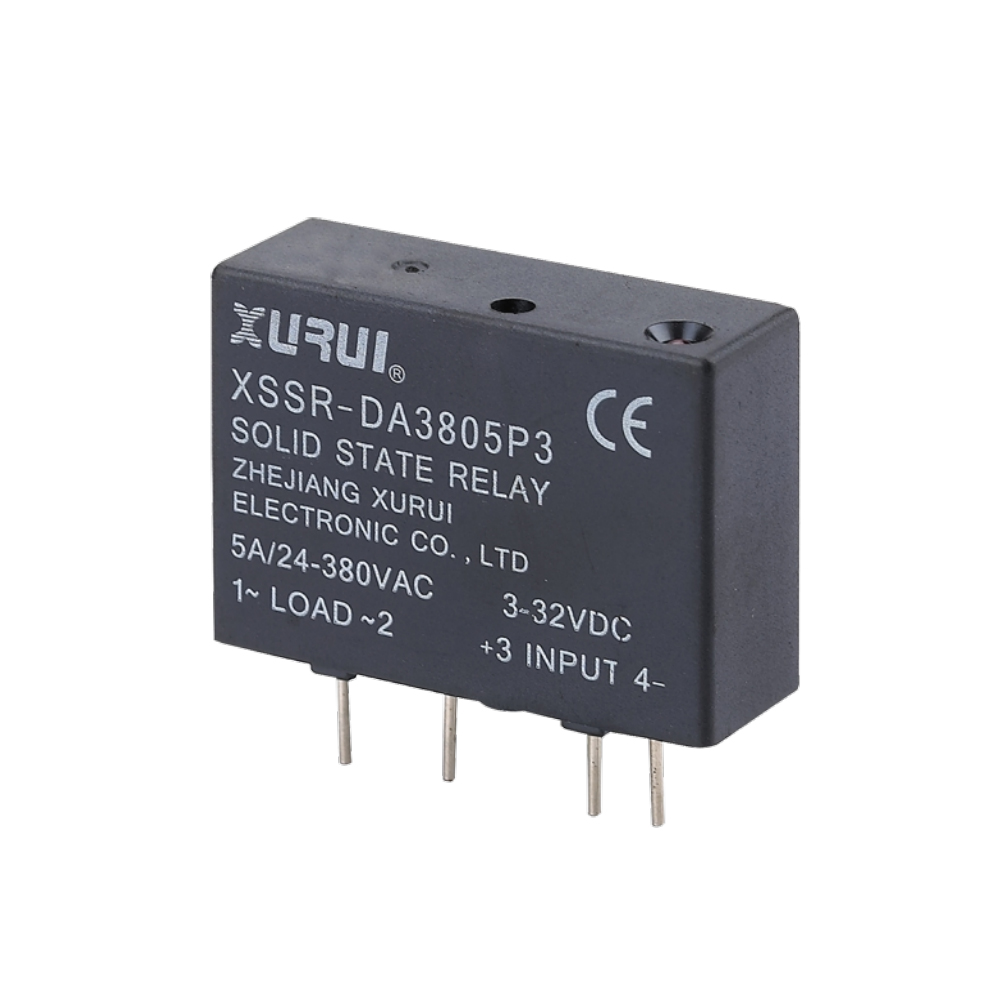
The XSSR-P1, P2 and P3 series is listed for 24-240VAC loads up to 2A, with 5V, 12V or 24VDC control and a 0.03A minimum load. Its applications include computer-periphery connection, electric stoves, heating and warm control, signal lights and AC motor control. If a small consumer product becomes hot after enclosure assembly, first verify that the real load and inrush do not exceed the 2A maximum before assuming the SSR is faulty.
Analog-controlled loads: check XSSVR-CA W2 ratings and mounting
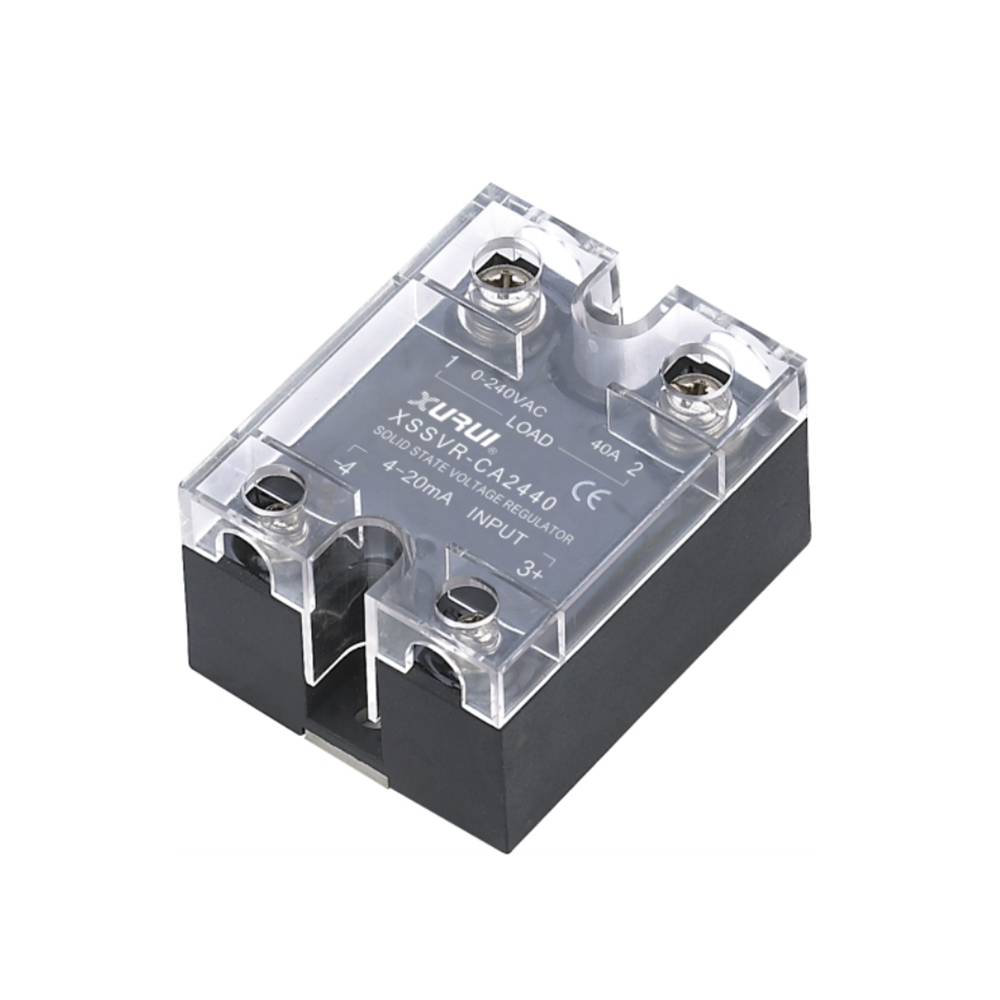
The XSSVR-CA W2 uses a 4-20mA input to control a 0-240VAC load across a listed 10A-120A range. It is a horizontal screw-mounted design with a PA66 nylon housing and a 0.05A minimum load. Its listed use is analog closed-loop control in industrial automation systems. For a consumer-electronics product that uses a proportional heating or analog control loop, the key checks are the exact current model, the inductive or resistive load type and the mounting contact under the relay.
DIN-rail assemblies: check XSSR-3H spacing and rail condition
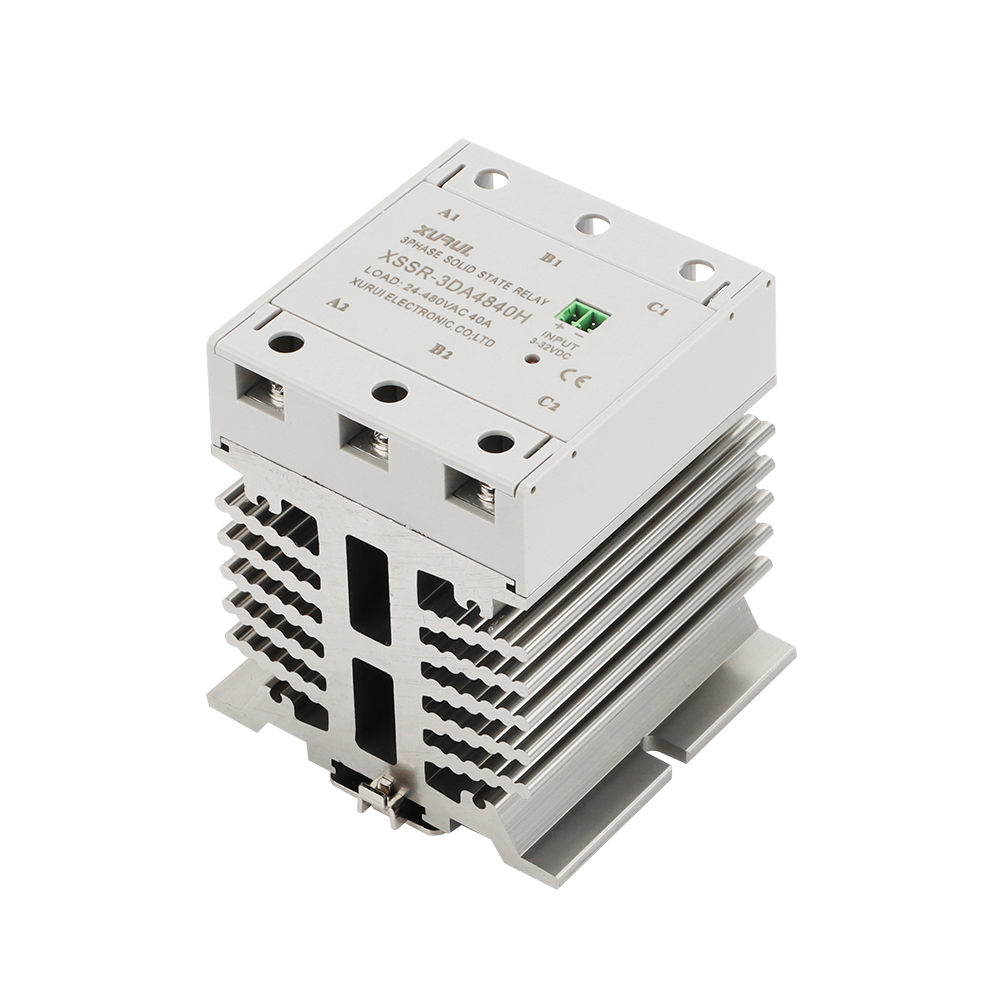
The XSSR-3H is listed for 24-480VAC loads at 10A-60A, with 3-32VDC or 80-250VAC control, DIN-rail mounting and an operating range of -20°C to +70°C. Its housing combines PA66 nylon with aluminium. In an enclosure, the rail and adjacent modules can act as a shared heat path, so check spacing, nearby warm components and whether the rail area receives any airflow.
Higher-current loads: avoid treating XSSR-W2 as a drop-in thermal fix
The XSSR-W2 family is listed for 75-480VAC loads at 50A-200A depending on model, with 3-32VDC or 80-250VAC control, horizontal screw mounting and CE and RoHS listing. A higher-current model can be appropriate when the measured load genuinely exceeds the smaller relay's rating, but a larger part number is not a substitute for fixing a poor mounting surface or a sealed enclosure with no heat path.
Remediation checklist: load, mounting, enclosure and verification
- Reduce or re-check the load: compare the measured current with the exact model's maximum and apply only the documented safety factor for that model.
- Improve the mounting path: use a flat surface, the specified hardware and only the thermal interface allowed by the model instructions.
- Improve the enclosure: restore intended airflow, remove unnecessary heat sources near the relay, and avoid blocking vents or filters.
- Check the control and load pairing: confirm that the control voltage or current, load voltage and switching type match the exact SSR model.
- Re-test after each change: use the same load, duty cycle, ambient temperature and measurement points so the result can be compared.
- Escalate with data: if the relay remains hot, provide the supplier with measured current, enclosure temperature, mounting photos and the exact model rather than a general description.
Consumer-electronics use cases where enclosure heat is easy to miss
These are conditional application examples, not claims about a specific installed customer project.
Compact appliance controller with a small AC load
A small consumer appliance may use an XSSR-P series relay for a 24-240VAC load up to 2A. The bench test may pass in open air while the finished housing traps warm air around the board. Check the true load current, the minimum load and the internal air temperature after the product has run for a realistic period.
Proportional heating loop in a sealed product
A product with an analog heating loop may use the XSSVR-CA W2 family. The 4-20mA control and 10A-120A load range make model selection important. Check the resistive or inductive load factor, the horizontal screw mounting and the temperature near the relay when the enclosure is closed.
DIN-rail assembly inside a larger consumer-equipment cabinet
A DIN-rail assembly may use the XSSR-3H for 24-480VAC loads at 10A-60A. The rail can conduct heat to adjacent devices, and the cabinet may have a different air temperature from the room. Measure the rail area during operation rather than assuming the cabinet remains at room temperature.
What not to do when the relay runs hot
- Do not replace the SSR before measuring the actual load and the enclosure temperature.
- Do not assume that a higher voltage label, such as a 600V rating, solves a 240V thermal problem. Voltage rating and thermal margin are different questions.
- Do not use a larger current model as the only fix when the mounting surface or enclosure airflow is clearly poor.
- Do not treat zero-crossing switching as a universal thermal remedy. Confirm the exact model's switching mode and its effect on the load.
- Do not compare a case temperature with an operating-temperature range unless the datasheet defines the same measurement point.
- Do not ignore multi-relay or three-phase assemblies. Each channel and the spacing between devices can affect the local temperature.
When to re-specify the relay instead of modifying the enclosure
Re-specification is reasonable when the measured load exceeds the selected model's maximum, when the required load type needs a documented safety factor that the current model cannot provide, or when the exact model's operating-temperature range is not suitable for the measured enclosure condition. It is also reasonable when the control type is wrong for the circuit, such as using an analog-input model where a DC control input is required.
Enclosure modification is usually the better first step when the relay is within its load rating but the local air is hot or the mounting contact is poor. A supplier conversation should include both paths, because the correct choice depends on the measured cause rather than the part number alone.
FAQ
Is a hot SSR casing automatically a compliance failure?
No. A warm casing is not by itself proof of non-compliance, and a certification mark does not prove that a particular enclosure assembly will stay within its thermal limits. Compliance depends on the exact model, its ratings, the installation conditions and the target market requirements. XURUI's UL certification is listed under file E334724 for toggle switches and solid state relays. Confirm that the exact SSR model and the finished product meet the applicable requirements for the intended market.
How can I tell whether load fit or enclosure conditions caused the heat?
Compare the same relay in open air and inside the finished enclosure while measuring load current, internal air temperature and case temperature. If the relay is within its exact current and voltage ratings and the open-air test is acceptable, enclosure conditions are the stronger suspect. If the measured current is near or above the model limit, or the load is inductive and lacks the documented margin, load fit needs correction first.
Will a higher-current SSR always run cooler?
Not necessarily. A higher-current model may provide more margin, but it can also be a different physical size with different mounting and thermal behaviour. The fix should follow the measured cause. If the current model is already within its rating and the enclosure has poor airflow, changing the relay alone may not lower the temperature. Check mounting, airflow and the real load before treating a larger relay as the cheaper solution.
Which XURUI SSR family should I check first?
Match the family to the actual circuit rather than to a temperature guess. The XSSR-P series is a low-power 24-240VAC, 2A family. The XSSVR-CA W2 is a 4-20mA analog-controlled 0-240VAC family with a 10A-120A range and model-specific load safety factors. The XSSR-3H is a DIN-rail 24-480VAC, 10A-60A family. The XSSR-W2 is a 75-480VAC, 50A-200A family. Confirm the exact model, load type and mounting method before ordering.
Can I evaluate an SSR sample in my own enclosure before production?
That is the most relevant test for an enclosure-related heat problem, because it uses the real air volume, mounting surface and load. XURUI's listed capability includes OEM/ODM support, a MOQ of 100 units, 100% pre-shipment testing and remote support. Sample pricing and sample lead time are not stated as universal terms, so confirm them for the exact model and test plan before scheduling the evaluation.
What lead time and MOQ should I plan for a replacement SSR order?
XURUI's supplied capability data lists a 15-30 day lead time and a MOQ of 100 units, with OEM/ODM support and 100% pre-shipment testing. Treat these as general capability values and confirm them against the exact model, order quantity, test requirements and delivery destination. If you need a sample or quote, share the measured load current, enclosure temperature, mounting method and target model with XURUI through the official website, and use the brochure for the product overview.
Next step: document the load, mounting and enclosure data first, then request a sample or quote for the exact SSR model. The XURUI product brochure can be downloaded here: XURUI product brochure.
Conclusion
A solid state relay that runs hot after enclosure assembly is usually telling the design team that the thermal system changed. The productive response is to measure the real load, verify the exact model limits, inspect the mounting path and compare the air inside the enclosure with the air outside it. Only after those checks should the relay be re-specified. With the XSSR-P, XSSVR-CA W2, XSSR-3H and XSSR-W2 families, XURUI gives consumer-electronics teams several starting points, but the correct choice still depends on measured load and enclosure conditions rather than a label alone.
Have Questions or Need More Details?
Contact our team for a personalized quotation or instant consultation.
Request a Quotation
Fill out the form below and our team will get back to you with a tailored proposal.
WhatsApp Direct Chat
Prefer to chat in real-time? Message us on WhatsApp for instant assistance & quick answers.
- Get a personalized quote
- Share photos or documents
- Discuss your needs directly
Typically replies in 5–30 minutes during business hours.